
It is 11:42 PM on a Sunday. You have a ten-page research paper due at midnight tomorrow, a stack of readings you haven’t touched since week three, and a tab open to a 20-minute video essay on a topic you don’t even care about. You tell yourself, “I’ll just watch this one video, make a quick cup of coffee, and then dive in.”
Two hours pass. You’re still watching videos, your room is suddenly spotless, and a heavy knot of anxiety is forming right in the pit of your stomach.

If this sounds like your typical school week, you are not lazy, flawed, or doomed to fail. You are simply caught in the classic student procrastination loop.
Most people treat procrastination like a time-management problem. They buy shiny new planners, download fancy productivity tools, and set strict schedules. Yet, when deadline day approaches, they end up staring blankly at a blinking cursor anyway.
Why? Because procrastination isn’t actually about poor time management. It’s about emotional regulation.
Why We Delay (The Real Psychology Behind It)
To break the habit, you need to know what you’re actually fighting. Your brain is wired to avoid negative emotions like boredom, anxiety, insecurity, and frustration. When you look at an assignment and feel overwhelmed or terrified of doing a bad job, your brain looks for the fastest route to relief. TikTok, cleaning your desk, or reorganizing your Spotify playlists offer instant relief. Writing a 2,000-word essay does not.
Psychologists call this temporal discounting. We naturally prioritize immediate comfort over future rewards—even when we know future-us will suffer for it.
Here are the four primary drivers behind student delay:
- Perfectionism in Disguise: You care so much about doing a good job that starting feels dangerous. If you don’t try, you can’t officially “fail.”
- Ambiguity and Friction: You don’t actually know what the next step is. A prompt like “Write Literature Essay” is too vague, so your brain bounces off it.
- The “Too Far Away” Illusion: When a deadline is three weeks out, your brain treats it like it belongs to someone else entirely.
- Energy Depletion: Trying to study after six hours of back-to-back lectures without food or rest isn’t a discipline failure; it’s physical fatigue.
7 Practical Steps to Break the Procrastination Loop
Now that we know the enemy, here is how you build a system that gets you moving—even when motivation is nowhere to be found.
1. Lower the Activation Energy (The 5-Minute Rule)
The hardest part of any task is almost always the transition from not working to working. Once you’re in motion, momentum usually carries you forward.
Tell yourself: “I am only going to work on this paper for five minutes. If I want to stop after five minutes, I can.”
By shrinking the commitment down to five minutes, you strip away the intimidation factor. Nine times out of ten, once you open the document and type a couple of rough sentences, you’ll keep going past the five-minute mark.
2. Break Tasks Into Ridiculously Small Units
Never put “Study for Chemistry” on your to-do list. It’s too big, too vague, and invites panic.
Instead, break the task down until each piece feels almost absurdly simple:
- Too Big: Write History Essay
- Better: Outline the main argument
- Best: Open a blank document, write the title, and find two primary sources.
When steps are tiny, starting costs almost no mental energy.
3. Use the Pomodoro Technique (With a Twist)
Traditional study marathons breed burn-out. Working in focused, bite-sized bursts keeps your brain fresh and prevents the dread of “working forever.”
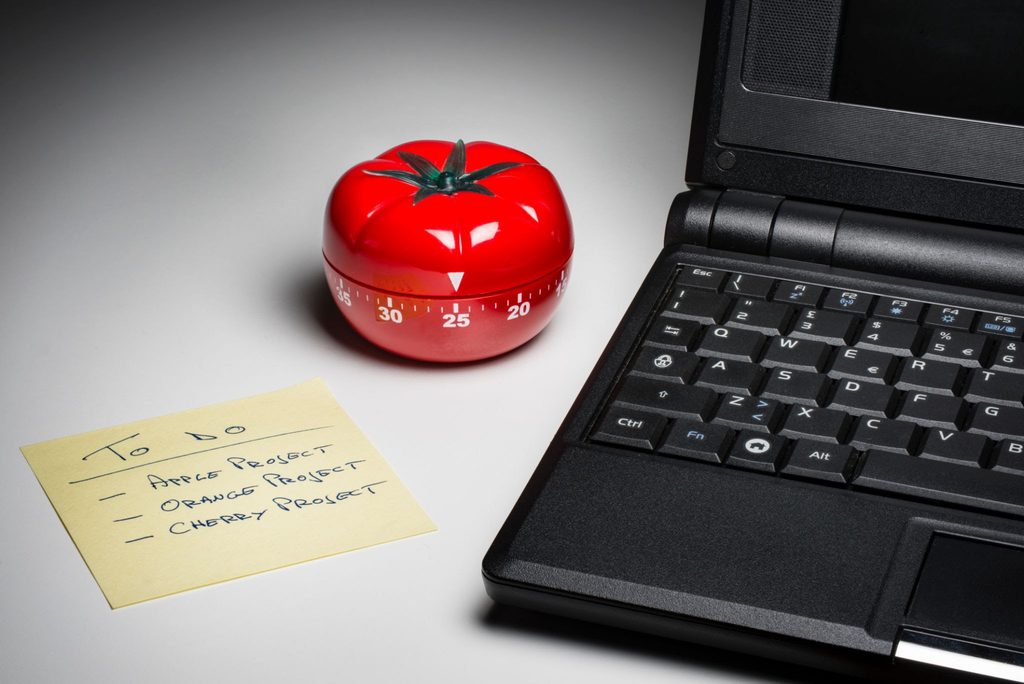
Here is how to run a classic session:
- Pick one single task.
- Set a timer for 25 minutes.
- Work on that single task until the timer rings—no tab switching, no checking texts.
- Take a 5-minute break (stand up, stretch, get water).
- Repeat four times, then take a longer 20-30 minute break.
The Twist: If 25 minutes feels too long on low-energy days, drop it to 15 or 10 minutes. The interval matters much less than the unbroken focus.
4. Create “Friction” for Distractions
Motivation is unreliable; environment is king. If your phone is sitting next to your keyboard, you will pick it up every time you hit a difficult sentence. You aren’t weak—your phone was engineered by teams of behavioral experts specifically to hijack your attention.
Outsmart your environment by adding physical steps between you and distraction:
- Put your phone in another room or leave it inside your backpack.
- Use browser extensions to block social media during study windows.
- Work in a location reserved only for studying—like a library corner—rather than your bed.
5. Separate “Planning” From “Doing”
Trying to decide what to study while sitting down to study leads directly to decision fatigue. You waste half your energy just figuring out where to begin.
End every evening by choosing your top 3 priority tasks for the next day. When you wake up or sit down at your desk, you don’t ask, “What should I do now?” You simply look at the note and start step one.
6. Forgive Past Delaying
This sounds counterintuitive, but research shows that self-blame actually increases procrastination. When you beat yourself up for wasting the morning, you create negative feelings (guilt, shame, anxiety). How does your brain like to handle negative feelings? By seeking distraction!
Forgive yourself for the lost hours. What happened two hours ago is irrelevant. Reset right now, start a 5-minute timer, and move forward.
7. Reward the Effort, Not Just the Grade
If you only celebrate when a project is completed or a grade is posted, you starve your brain of positive reinforcement during the long weeks of daily effort.
Give yourself small, immediate rewards after a solid study session: a chapter of a book you enjoy, a walk outside, or an episode of your favorite show. Connect the hard work directly to a sense of reward.
Building a Daily Anti-Procrastination Flow
You don’t need a 12-step morning routine to beat procrastination. A clean, dependable daily flow is more than enough:
| Phase | Goal | Action |
| Morning / Start | Zero Friction | Tackle your hardest task first when energy is highest (or run one 5-minute warm-up). |
| Mid-Day | Guard Energy | Use 25/5 interval blocks; switch locations if focus wanes. |
| Evening | Clear the Deck | Write down tomorrow’s 3 main priorities so your mind can relax overnight. |
Frequently Asked Questions
Is procrastination a sign of ADHD or other underlying conditions?
Procrastination is extremely common among all students, but chronic, severe procrastination that impacts every area of life despite your best efforts can sometimes be linked to executive dysfunction, ADHD, anxiety, or depression. If you find that strategies like task-chunking and environment design repeatedly fail to help, speaking with a academic counselor or healthcare professional is a great next step.
Why do I procrastinate even on subjects I genuinely love?
This usually stems from high expectations and perfectionism. When you care deeply about a subject, the pressure to produce high-quality work goes up, which increases fear of failure. Remind yourself that a messy first draft of something you love is better than a blank page.
What is “productive procrastination”?
Productive procrastination happens when you avoid a high-priority task (like studying for a final exam) by doing other useful tasks (like cleaning your entire apartment or organizing your email inbox). While it feels good because you’re staying busy, it’s still a dodge. Recognize it for what it is, pause, and return to the main task using the 5-minute rule.
How do I stop procrastinating when I have zero motivation?
Don’t wait for motivation to show up. Motivation usually follows action, not the other way around. Start with an action so ridiculously tiny that it requires almost zero willpower—like reading just one paragraph or opening one slide deck. Once you get moving, motivation often catches up.
What should I do if I’ve already put off an assignment until the night before?
First, drop the guilt—you don’t have time for it right now. Second, triage the work: look at the rubric and focus strictly on the highest-value sections. Third, set 25-minute study timers with short breaks to stay sharp, drink water, and avoid all-nighters whenever possible, as a completely sleep-deprived brain performs significantly worse than a slightly imperfect paper written with a clear head.